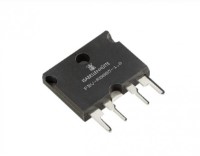
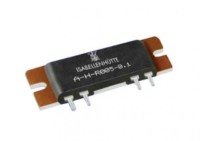
PBV/PBH Series Heatsink-Mountable Precision Current Sensing Resistors
Etched manganin foil resistive element with copper terminals
Power rating 3W in free air; 10W with heatsink mounted
Resistance range 0.5mΩ to 100Ω across the PBV and PBH series
PBV — four-terminal (Kelvin) connection for precision measurement at sub-ohm resistance values
PBH — two-terminal connection for the higher resistance range
Tolerance options ±0.5%, ±1%, and ±5%
TCR ±30 ppm/°C for values above 10mΩ; ±50 ppm/°C for lower values
Internal thermal resistance less than 4 K/W to aluminium base plate; less than 15 K/W to ambient
Inductance less than 5 nH at 50mΩ — suitable for pulsed and high-frequency circuits
Dielectric withstanding voltage 500V AC
Operating temperature range −55°C to +125°C
Long-term stability — less than 0.5% resistance shift after 2000 hours at rated load
Single-screw heatsink mounting; standard resistance values per E12 series
What are the PBV/PBH Series Heatsink-Mountable Precision Current Sensing Resistors?
The PBV and PBH are precision current sensing resistors designed specifically for heatsink mounting, offering a power rating of 3W in free air that rises to 10W when the aluminium base of the component is coupled to an external heatsink. Both variants use an etched manganin foil resistive element with copper terminals — a construction that combines the very low and stable TCR of manganin with the low inductance of a flat etched foil geometry — and share the same heatsink-compatible body shape, which is sized to align with standard power transistor and power module mounting footprints. This form factor allows the resistor to occupy an existing heatsink mounting position alongside power semiconductors in a drive or converter assembly, simplifying mechanical integration without requiring a dedicated resistor mounting arrangement.
The PBV and PBH differ in their terminal configuration to suit different resistance ranges. The PBV is a four-terminal Kelvin device intended for the sub-ohm range from 0.5mΩ upward, where the Kelvin connection is essential: by separating the current-carrying terminals from the voltage sense terminals, the resistance of solder joints, lead lengths, and PCB traces is entirely excluded from the measurement, allowing the stated ±0.5% tolerance to be realised in circuit at the lowest resistance values. The PBH uses a conventional two-terminal connection and covers the higher resistance portion of the combined range extending to 100Ω, where the relative magnitude of lead resistance errors is small enough that the additional terminals of the Kelvin arrangement are unnecessary. Together the two variants provide a continuous resistance coverage from 0.5mΩ to 100Ω within a single mechanically compatible package family.
The etched manganin foil construction delivers three properties that define the PBV/PBH’s suitability for precision current measurement. First, the TCR of ±30 ppm/°C for values above 10mΩ means that even at 10W dissipation — the rated heatsink-mounted power level — the resistance change due to self-heating is tightly controlled, preserving measurement accuracy under sustained load. Second, the foil geometry produces very low inductance, below 5 nH at 50mΩ, which allows the component to accurately reproduce instantaneous current in switched and pulsed circuits without the inductive distortion that a wirewound shunt of equivalent resistance would introduce. Third, long-term stability testing confirms less than 0.5% resistance shift after 2000 hours at rated load and 70°C terminal temperature, establishing the component as suitable for applications where the shunt value must remain reliably within calibration over years of continuous service.
The low internal thermal resistance of less than 4 K/W to the aluminium base plate is the constructional feature that enables the 10W heatsink rating. At full rated power, the temperature rise across the element-to-baseplate interface remains small, and the bulk of the dissipation is transferred through the aluminium substrate to the external heatsink rather than being retained within the component body. This thermal path allows the PBV/PBH to operate continuously at 10W without exceeding the element’s temperature limits, provided the heatsink maintains the base plate at a manageable temperature. The single-screw mounting arrangement facilitates quick installation and, where thermal compound is used at the interface, ensures consistent and repeatable thermal contact between the component base and the heatsink surface.
PBV/PBH Series Heatsink-Mountable Precision Current Sensing Resistors Specifications
A practical overview for engineers and procurement teams evaluating resistive solutions.
Model: PBV, PBH
Resistor type: Current sensing
Description: Four terminal precision
Power Rating: 3W, 10W
Resistance (Ω): 0.5m~100m
Tolerance (%): ±0.5, ±1, ±5
TCR (ppm/C): 30, 50
Applications of the PBV/PBH Series Heatsink-Mountable Precision Current Sensing Resistors
Where RARA current sensing resistors are deployed in the field.
Test and measurement instruments — precision reference shunt elements in current clamp meters, power analysers, source-measure units, and laboratory bench instruments, where the four-terminal PBV eliminates lead resistance error and the ±30 ppm/°C TCR maintains measurement accuracy across the instrument’s operating temperature range without frequent recalibration.
Power supply and DC-DC converter current sensing — output current measurement and current-mode control feedback in high-power switching supplies and DC-DC converters, where the 10W heatsink-mounted rating handles the continuous power dissipation at high load currents and the low inductance foil element avoids interference with the switching control loop.
Motor drive and frequency converter current feedback — DC bus and phase current sensing in variable frequency drives and servo amplifiers, where the heatsink-compatible mounting allows the shunt to be co-located on the power stage heatsink alongside the drive transistors, and the low inductance construction accurately reproduces the current waveform at converter switching frequencies.
Motor drive and frequency converter current feedback — DC bus and phase current sensing in variable frequency drives and servo amplifiers, where the heatsink-compatible mounting allows the shunt to be co-located on the power stage heatsink alongside the drive transistors, and the low inductance construction accurately reproduces the current waveform at converter switching frequencies.
EV battery management and on-board charging — precision charge and discharge current monitoring in electric vehicle battery management systems and on-board charger units, where the Kelvin connection of the PBV supports accurate coulomb counting at the milliohm shunt values needed to minimise voltage drop in the high-current battery circuit.
Industrial inverters and regenerative drives — current sensing in regenerative drive systems and industrial inverter modules, where the combined heatsink mounting compatibility and high pulse power capability of the etched foil element accommodate the transient current peaks present during load steps and regenerative braking without degradation of the shunt resistance.
Renewable energy inverters and energy storage systems — continuous-duty current measurement in solar inverter DC input stages and battery energy storage system converters, where the 2000-hour stability specification and wide −55°C to +125°C operating temperature range satisfy the long service intervals and variable ambient conditions of outdoor renewable energy installations.
Precision power metering and energy monitoring — shunt elements in revenue-grade and sub-metering power analysers and energy meters, where the four-terminal Kelvin connection and tight tolerance of the PBV provide the calibration-grade current measurement accuracy required for billing-grade energy accounting at sustained high current levels.
Welding inverters and plasma power equipment — continuous high-current sensing in inverter-based welding machines and plasma cutting power supplies, where the heatsink mounting capability manages the sustained thermal load and the robust manganin foil construction withstands the repetitive current transients of arc welding and cutting duty cycles.
Medical and laboratory instrumentation — precision current measurement in laboratory power supplies, electrophoresis equipment, and analytical instruments requiring a stable, well-characterised low-resistance shunt with four-terminal access, long-term stability, and a low inductance element that does not perturb sensitive measurement circuits.
Related Products of the PBV/PBH Series Heatsink-Mountable Precision Current Sensing Resistors
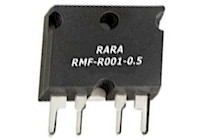
Model: RMF
Resistor type: Precision
Description: High power 4 terminal
Power Rating: 10W
Resistance (Ω): 0.5~200
Tolerance (%): ±0.1~±5
TCR (ppm/C): 5, 10, 15, 20, 30

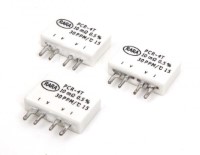
Model: PCR4T
Resistor type: Current sensing
Description: Through Hole
Power Rating: 3W
Resistance (Ω): 1m-10m
Tolerance (%): ±0.5, ±1, ±5
TCR (ppm/C): 30
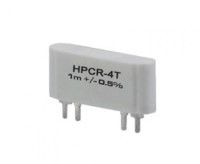
Model: HPCR4T
Resistor type: Current sensing
Description: Through Hole
Rated Current: 35-65A
Resistance (Ω): 0.5m-4m
Tolerance (%): ±0.5, ±1
TCR (ppm/C): 30
Model: AH
Resistor type: Current sensing
Description: Four terminal precision
Power Rating: 3W, 10W
Resistance (Ω): 1m~100
Tolerance (%): ±0.1, ±5, ±1
TCR (ppm/C): 10
Why Choose RARA Current Sensing Resistors
What sets RARA apart for engineers and procurement managers in industrial and automotive markets.
01
8 Sub-Categories
No other single supplier covers AEC-Q200 chip shunts, milliohm precision types, four-terminal Kelvin shunts, power metering, and 12,000A panel shunts under one ISO-certified roof.
02
Extreme Precision
HPS, UHPS, and PSS precision shunts deliver ±0.05% tolerance and 3 ppm/°C TCR — meeting the accuracy demands of EV battery coulomb counting, precision power analyzers, and billing-grade energy metering.
03
Automotive Qualified
Multiple AEC-Q200 certified models (BCS, LRA, ECS, BWR, TCS, PCBS) with IATF 16949 manufacturing certification — covering EV battery management, motor control, and charging applications.
04
Global Track Record
Trusted by Tesla, GM Korea, Proterra, Siemens, Rockwell, and Schneider Electric — deployed in EV powertrains, industrial drives, and utility metering systems across six continents.