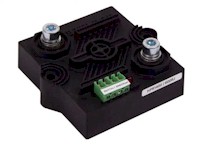
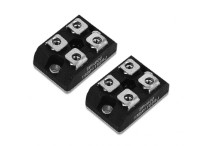
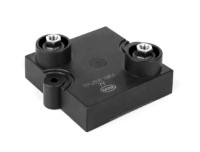
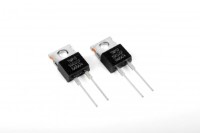
Power film resistors are a critical component in modern electronics, offering high power handling, compact design, and exceptional precision. From EV systems to industrial power control, these resistors are engineered for applications where space, heat, and accuracy are key challenges.
In this post, we’ll cover:
What Are Power Film Resistors?
Real Product Examples
RARA Thin/Thick Film Technologies
Applications of Power Film Resistors
How to Choose the Right Power Film Resistor
Why Power Film Resistors Are Gaining Popularity
________________________________________
What Are Power Film Resistors?
Power film resistors use a thin or thick resistive film deposited onto a substrate, allowing extremely accurate resistance control and stable performance.
Unlike traditional wirewound resistors, power film resistors:
Provide higher precision
Offer lower inductance
Deliver compact high-power performance
These resistors are ideal when you need “big power with limited space” and can be laser trimmed for tight tolerances.
1. High Power Density
Power film resistors deliver significant wattage in a compact footprint, making them ideal for modern electronics.
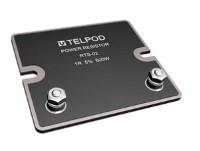
Up to 2000W in planar designs
Compact chassis-mount options
2. Excellent Precision and Stability
Tight tolerance options (±1% or better)
Low TCR (as low as 50 ppm/°C or better)
3. Low Inductance
Unlike wirewound designs, film resistors are suitable for:
High-frequency circuits
Fast switching applications
4. Superior Thermal Performance
Advanced substrates and mounting designs allow:
Efficient heat dissipation
Stable operation under high load